Specialty
Surgical Oncology
A resection depends on a pathologist reading a frozen section while the patient is still open, and on a multidisciplinary decision taken weeks earlier. India has few pathologists for the volume of work, and both of those events, the reading and the decision, usually reach the record as a phone call and a set of minutes.
The two moments that decide the operation happen outside the operating record.
One is a committee. The other is a laboratory, twenty minutes away, on a telephone.
The board decides the plan. The frozen section decides the margin. Neither is currently an object the record holds, so the operation note asserts both and the evidence for both sits somewhere else.
Move past the decision that survives only as minutes. A board decision captured as a form is locked when it is finished, carries its author and its date, and sits on the record it governs.
Impact and action
The frozen section.
- The request is a phone call and the result is a shout down a corridor, and the operation note records what somebody heard.The section is an order with a state, tracked from the moment it is placed to the moment it is finished, and its result form is attached to it.ForgeGlyph
- A histopathology report returns days later on paper and is matched to the case by hand.The report returns to the order that requested it, so the result and the request are the same thread.ForgeAtlas
The board.
- Staging, the plan and the dissent are in minutes, and the surgeon in theatre is working from memory of a meeting.Staging and the decision are captured as forms on the record, so the reason for the operation is readable inside the operation.Glyph
The theatre.
- Booking, the frozen section, the specimen and the consumables are four separate books that agree only by luck.Each is an order on one path, and the charge for a chargeable one lands on the account as it is placed.ForgeVault
The specimen.
- A specimen is labelled by hand and travels with a form, and a mislabelled jar is discovered at the microscope.The specimen is identified by the order it belongs to, and the laboratory reads the same identity the theatre wrote.Forge
Request, read, report, and back to the case.

Where the operation is done is part of the operation.
Two decisions taken outside the theatre govern what happens inside it: the board plan, and how often this unit does this operation.
The relation between the volume of a unit and how its patients do after a cancer resection has been measured for two decades and holds, in one direction, for every procedure examined. A unit unable to count its own cases cannot manage that relation at all.
Eliminate the operating register that exists as a hardbound book in the theatre corridor. Falcon reads case volume, cancellation and review out of the records the work already produced, and names the source of every figure it prints.
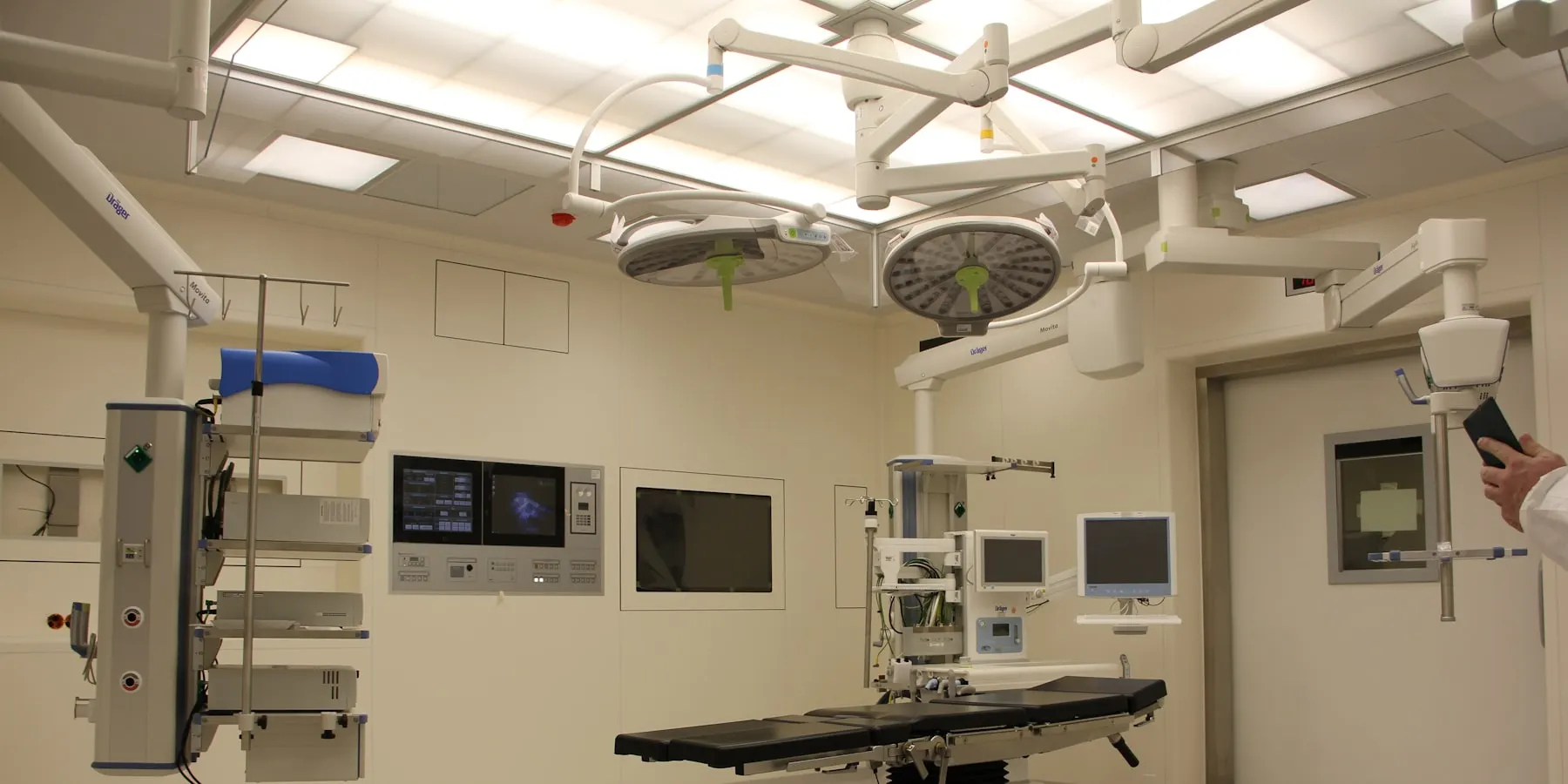
What an Indian cancer unit adds
The specimen leaves the room.
- A specimen is labelled by hand and travels with a requisition, and a mismatch between the two is discovered at the microscope.The specimen is identified by the order it belongs to, so the laboratory reads the identity the theatre wrote.Forge
The list is a resource rather than a book.
- Cases are scheduled against a whiteboard, and a cancellation is absorbed by an afternoon of telephone calls.The theatre, its equipment and the surgeon on duty are objects in the digital twin of the hospital, so a list is scheduled against something real and a lost slot is visible as one.
The implant, the stapler and the mesh.
- High value consumables are recorded on a theatre sheet and priced afterwards, and the difference returns as a deduction on the claim.Each is captured as it is used, and the charge is the same object as the record of using it.ForgeVault
- Consultant and anaesthetist shares are computed off the finalised bill in a spreadsheet, and disputed every month.The finalised bill is one tamper-proof financial record, and the reports management reads are produced from it rather than beside it.Vault
The evidence a review asks to see.
- Mortality and morbidity minutes, the signed checklist and the credentialing file are assembled in the weeks before an assessment.They stand as they are produced, alongside the incidents and their investigations, the committees and their action items, the training records and the internal audits.Vigil
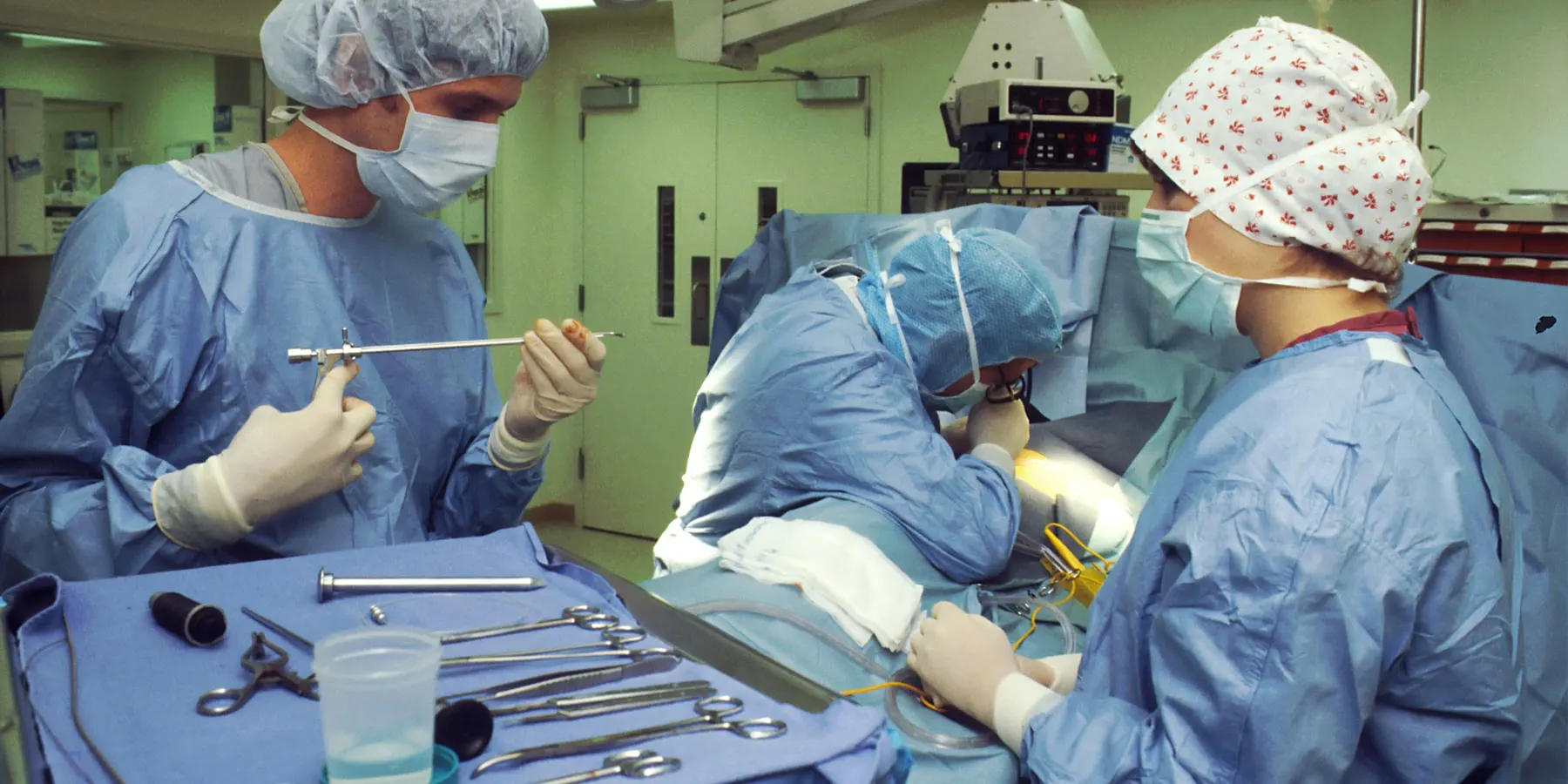
Published research
What the literature measured, and who measured it.
Published research on surgical units elsewhere. Nothing here is a Pensieve outcome; our hospital partners are under a confidentiality agreement and we publish no result of our own.
- Across fourteen cardiovascular and cancer operations, adjusted mortality was lower at higher volume hospitals for every one of them, with the absolute difference running from just over 0.2 percent to more than 12 percent depending on the procedure.Birkmeyer JD, Siewers AE, Finlayson EVA, et al. Hospital Volume and Surgical Mortality in the United States. New England Journal of Medicine, 2002;346(15):1128-1137.
- At eight hospitals across eight countries, deaths fell from 1.5 percent to 0.8 percent and inpatient complications from 11.0 percent to 7.0 percent after the surgical team began briefing off one checklist.Haynes AB, Weiser TG, Berry WR, et al. A Surgical Safety Checklist to Reduce Morbidity and Mortality in a Global Population. New England Journal of Medicine, 2009;360(5):491-499.
- After multidisciplinary team working was introduced across a health region, breast cancer mortality at five years was 18 percent lower than in comparison regions, across 13,722 women.Kesson EM, Allardice GM, George WD, et al. Effects of multidisciplinary team working on breast cancer survival: retrospective, comparative, interventional cohort study of 13 722 women. BMJ, 2012;344:e2718.