Specialty
Cardiology
Most people having a heart attack in India reach a hospital with no catheterisation laboratory and are moved to one that has. The clock that decides how much heart muscle survives starts at the first door and is written down at the second, on paper, by someone who was elsewhere when it started.
A clock reconstructed after the fact is a clock nobody ran.
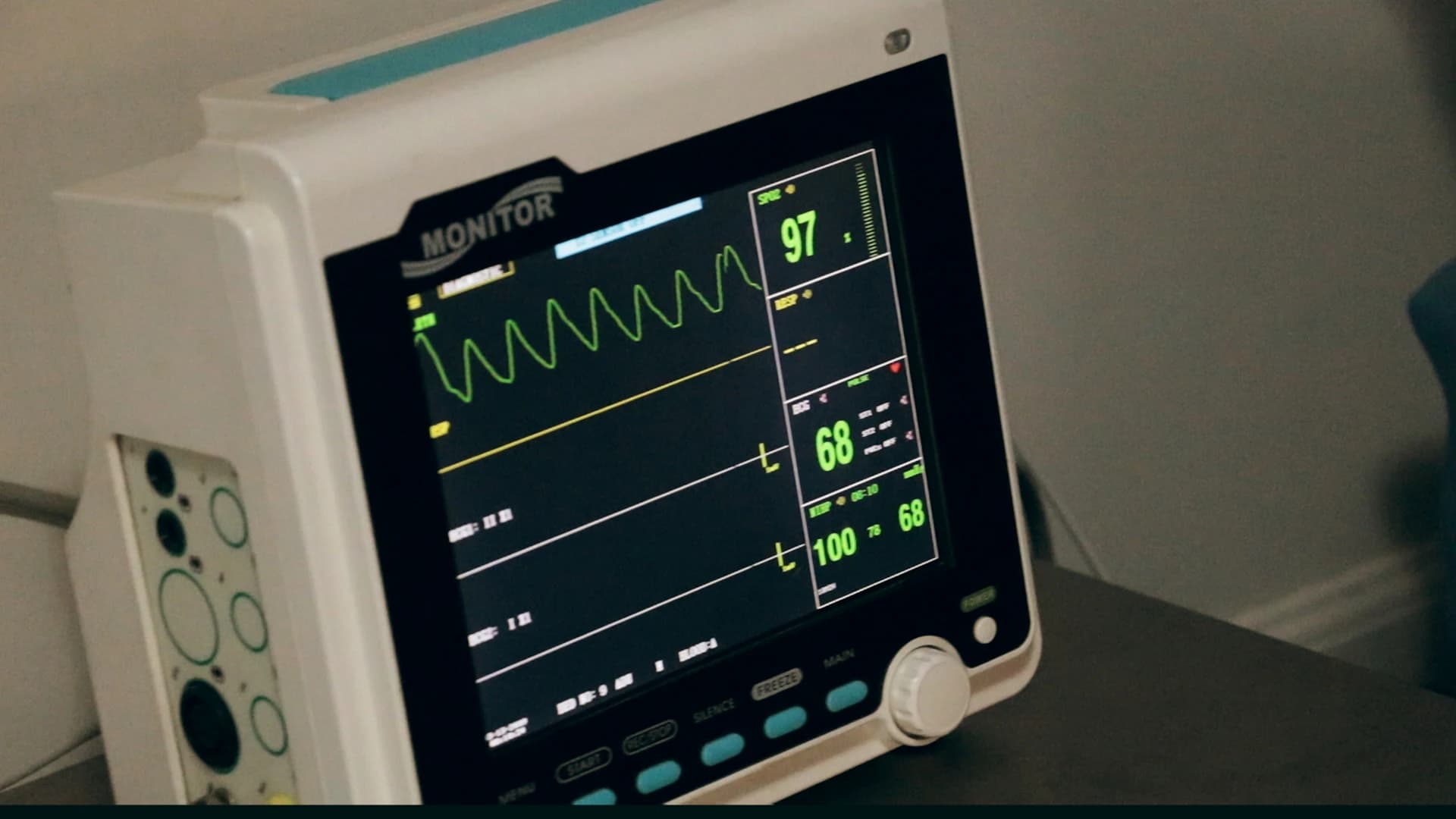
Impact and action
The clock.
- Time from arrival to intervention is assembled afterwards out of a paper record, so a delay is discovered in an audit rather than in the shift it happened in.The chest pain pathway runs as a timed procedure, and a step that falls behind is flagged as overdue to the person who can move it.CadenceSentinel
- A critical troponin returns to a screen in the laboratory, and the ward hears about it when somebody walks over.A critical result raises an alert with an owner, an escalation chain up a list of people, and a record of who acknowledged it and when.SentinelRaven
The study, and the note that ordered it.
- Echocardiograms, ECGs and catheterisation studies land in an imaging system the record cannot reach, so a consultant reads the image in one place and writes about it in another.The completed study is tied back to the order that created it and opens beside that order in the record.ForgeAtlas
The patient who arrives already treated.
- A transfer from a hospital with no catheterisation laboratory arrives with a discharge slip, and the workup starts again from the beginning.The referring hospital connects on the same managed link the analysers and monitors use, so the earlier ECG and the earlier troponin are on the record before the trolley is.Westron
What the laboratory used.
- Stents, balloons and wires are written on a theatre sheet and priced afterwards, and the gap between the two comes back as a deduction on the claim.Every device is captured as it is used, and the charge is the same object as the record of using it.ForgeVault
The year after.
- Secondary prevention rests on a review that a patient two districts away has to remember without help.Reviews and drug reviews stand as due tasks against a named owner, and the reminder goes out on a channel the patient agreed to.QuestRaven
The unit, as an object
The cardiac unit is a resource before it is a department.
Beds, machines and the people on shift.
Nexus holds the digital twin of the hospital: the wards and rooms, the equipment and where each piece is right now, the teams, and the duty roster that says who is on. A cardiac unit that knows its own state can be scheduled against; one that lives on a whiteboard can only be reported on.
Read against it.
Falcon reads from every tool without owning or altering any of it, and shows where each figure came from, so a question about last month resolves to the records that answer it.
The minutes are made of process, and process is what a hospital can change.
A clock reconstructed at the audit meeting is a clock nobody ran.
The studies that asked why one hospital treats faster than another found the difference in paging, in who holds the authority to act, and in whether times are fed back to the people producing them. None of it was a change to the catheterisation laboratory itself.
Move past the arrival time written on a case sheet and typed up a week later. Cadence runs the chest pain pathway as timed steps while the case is still live, Sentinel escalates a step nobody has acknowledged, and Falcon reads the finished times back out of the records the work already produced.
What India adds
The first door is usually somewhere else.
- A patient is thrombolysed at a district hospital and moved, and the receiving team is handed a discharge slip and a phone number.The referring site connects over the same managed link the analysers and monitors use, so the first ECG and the first troponin reach the record before the trolley does.WestronAtlas
The payer decides while the wire is in.
- Cashless authorisation runs on a clock the insurer sets, and the desk assembles the document pack afterwards out of four systems.The claim is produced from the clinical event that created it, priced against whichever payer covers this admission, with deposits and part payments on the same account.Vault
- Stents, balloons and wires are written on a theatre sheet and priced later, and the difference returns as a line item deduction.A device is captured as it is used, and the charge is the same object as the record of using it.ForgeVault
The review that has to happen anyway.
- Mortality review minutes, the catheterisation register and the quality indicators are rebuilt in the six weeks before an assessment.They stand as they are produced: incidents and their investigations, committees and their action items, credentials, internal audits and equipment maintenance.Vigil
Published research
What the literature measured, and who measured it.
These are findings about hospitals that had never heard of Pensieve. They are here because the mechanism above is aimed at what they measured, never because we claim their result.
- A national study of hospitals performing primary angioplasty identified six specific process changes, among them activation of the catheterisation laboratory by the emergency physician, each independently associated with a significantly shorter door to balloon time.Bradley EH, Herrin J, Wang Y, et al. Strategies for Reducing the Door-to-Balloon Time in Acute Myocardial Infarction. New England Journal of Medicine, 2006;355(22):2308-2320.
- Median door to balloon time in the United States fell from 96 minutes in 2005 to 64 minutes in 2010, and the share of patients treated within 90 minutes rose from 44.2 percent to 91.4 percent.Krumholz HM, Herrin J, Miller LE, et al. Improvements in Door-to-Balloon Time in the United States, 2005 to 2010. Circulation, 2011;124(9):1038-1045.
- Across primary angioplasty admissions at 423 hospitals, a shorter door to balloon time was associated with lower in hospital mortality within each year studied.Nallamothu BK, Normand SL, Wang Y, et al. Relation between door-to-balloon times and mortality after primary percutaneous coronary intervention over time: a retrospective study. The Lancet, 2015;385(9973):1114-1122.