Specialty
Obstetrics & Gynaecology
Antenatal care in India is carried by the mother on a card, so the hospital usually meets the pregnancy for the first time on the day she arrives in labour. Every obstetric ultrasound in the department also opens a statutory register whose absence is a criminal matter rather than an audit finding.
The shape of the work
Obstetrics is the one specialty where the hospital treats two patients and opens one file.
The pregnancy
A pregnancy is a schedule, and the schedule runs outside the building. Visits, weights, pressures and scan reports accumulate over nine months across an antenatal card, a scan centre, a laboratory and a labour room, and the hospital holds the last of the four.
The delivery
Labour is charted minute by minute on a sheet that stays at the bedside and is filed afterwards, so the curve is visible to the people in the room and to nobody else while it still decides anything.
The pair
At delivery the record splits. The mother continues, the newborn begins with no identity, and the two are joined afterwards by a name written on a cot card.
Impact and action
The antenatal record is in the patient’s handbag
- Visits, weights, blood pressures and scan reports are written on a card the hospital does not hold, so the team meets a nine-month history in the labour room.Quest runs the antenatal schedule as due visits against the patient, Raven sends each reminder on the channel she consented to and inside her quiet hours, and Atlas holds every visit as one record across the pregnancy.QuestRavenAtlas
The partograph is a sheet of paper
- The labour chart is drawn by hand while the labour is happening, and its arithmetic falls to the person with the least attention to spare.Glyph builds the partograph as a form with its own validations and calculators, locks it the moment it is completed, and keeps the version history that shows which design was in use at the time.Glyph
Form F is a statutory register kept by hand
- Every prenatal diagnostic procedure in India carries a declaration under the PC&PNDT Act, and the register that proves it sits in a ledger nobody can search on the morning an inspector asks.Glyph captures the declaration as part of the scan order and locks it on sign-off; Vigil holds it as standing evidence with the rest of the hospital’s statutory material.GlyphVigil
Mother and newborn separate at the moment of birth
- The delivery closes one record and opens another, and everything the newborn inherits from the pregnancy has to be told again.Gate opens the newborn’s visit at delivery and Atlas links it to the mother’s record, so the pair share one timeline and one permission check.GateAtlas
A caesarean is priced by the payer and assembled by the desk
- A scheme or an insurer pays a package rate for the delivery, and the insurance desk rebuilds the case from the file after the patient has gone home.Vault carries the payer’s own tariff, raises each charge as its order is fulfilled, and packages the claim from those charges, so what leaves the hospital is the case that happened.Vault
In the unit
One patient arrives, two leave.

Two patients, one admission, and a record that has to hold both.
India delivers at a scale nothing else in the hospital matches, and the caesarean share keeps climbing.
Obstetric emergency is the case where a protocol earns its place: blood loss measured rather than estimated, a staged response, and everything the team needs already in the room. Where that has been organised as a standard protocol rather than left to instinct, severe maternal morbidity has moved.
Move past the partograph filled in from memory after the delivery. Glyph builds it as a form with its own validation, Quest carries the antenatal schedule as due tasks, and Atlas links the newborn to the mother in the first minute rather than in the afternoon.
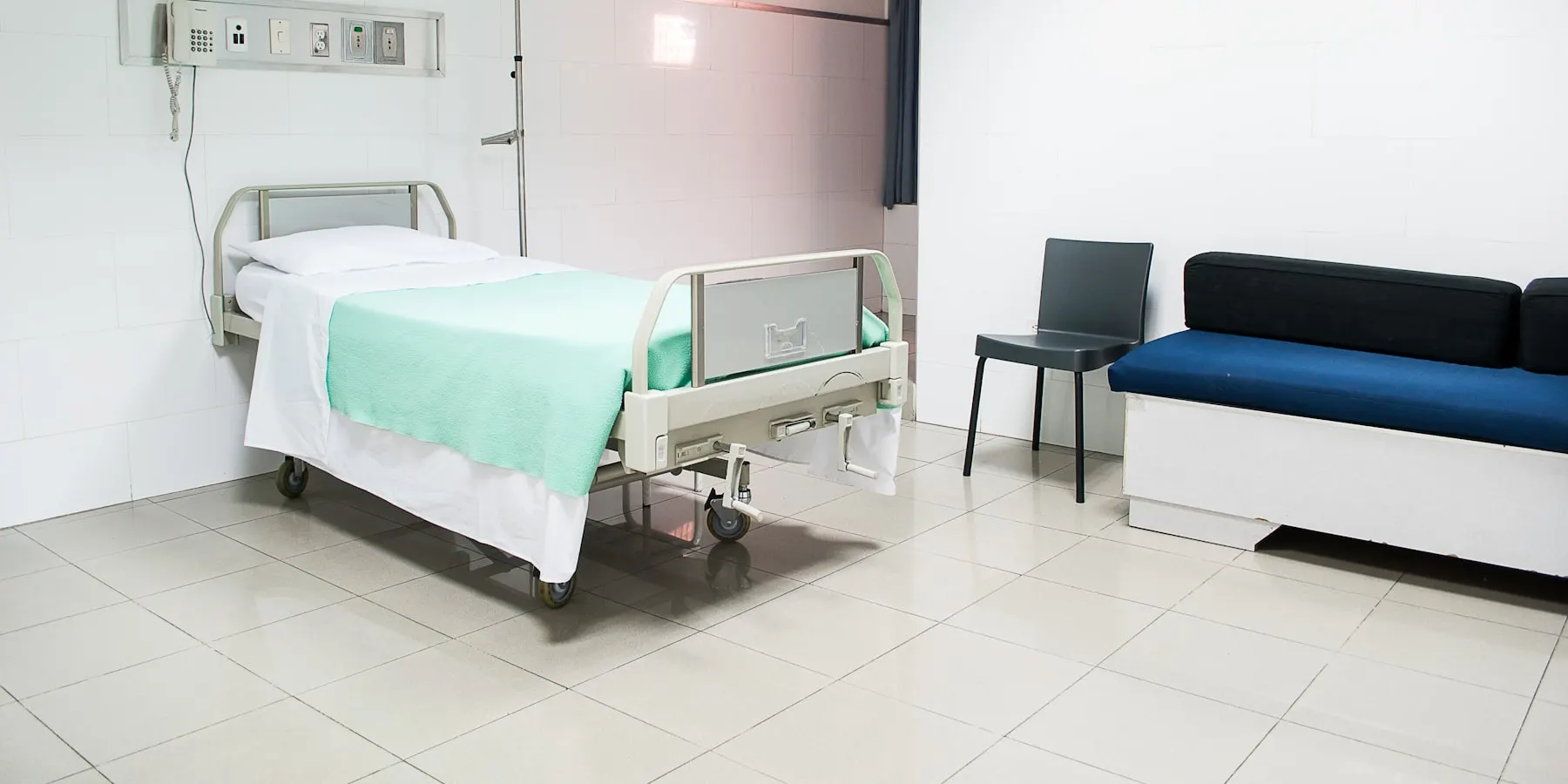
What an Indian labour room adds
The two records begin together.
- The newborn is registered later as a separate patient, and the link back to the mother is a surname typed twice.Gate opens both visits and Atlas holds the link, so the mother and the child are one thread from the first minute.GateAtlas
- Birth registration and the certification form are handled outside the record and chased afterwards.The form is built once by the hospital, locked when it is finished, and held against the patient with its version history.Glyph
The emergency runs on a clock.
- A postpartum haemorrhage is managed off a protocol that lives in a folder and in the memory of whoever is senior that night.The staged response runs as a live procedure with an owner for every step, and a step running late is flagged while it can still be moved.CadenceSentinel
The prenatal scan carries criminal liability.
- A Form F is completed on paper for every prenatal diagnostic procedure, filed by hand, and produced on demand for the appropriate authority.The form is authored by the hospital, locked on completion with its version history, and held against the patient and the order that produced the scan.GlyphAtlas
The theatre, at twenty minutes of notice.
- An emergency caesarean books the theatre by telephone and records its consumables on a sheet.The theatre and the team on shift are objects in the digital twin of the hospital, and every item used reaches the bill at the moment it is used.ForgeVault

Published research
What the literature measured, and who measured it.
Published findings about hospitals elsewhere. Nothing below is a Pensieve outcome, and every hospital running Pensieve is under a confidentiality agreement.
- Hospitals in a state perinatal quality collaborative that adopted a standard obstetric haemorrhage protocol reduced severe maternal morbidity among haemorrhage patients by 20.8 percent, against 1.2 percent at comparison hospitals over the same period.Main EK, Cape V, Abreo A, et al. Reduction of severe maternal morbidity from hemorrhage using a state perinatal quality collaborative. American Journal of Obstetrics and Gynecology, 2017;216(3):298.e1-298.e11.
- Caesarean section use nearly doubled worldwide between 2000 and 2015, from 12.1 percent to 21.1 percent of births, with the widest disparities inside countries rather than between them.Boerma T, Ronsmans C, Melesse DY, et al. Global epidemiology of use of and disparities in caesarean sections. The Lancet, 2018;392(10155):1341-1348.
- At eight hospitals across eight countries, deaths fell from 1.5 percent to 0.8 percent and inpatient complications from 11.0 percent to 7.0 percent after the surgical team began briefing off one checklist.Haynes AB, Weiser TG, Berry WR, et al. A Surgical Safety Checklist to Reduce Morbidity and Mortality in a Global Population. New England Journal of Medicine, 2009;360(5):491-499.