Department
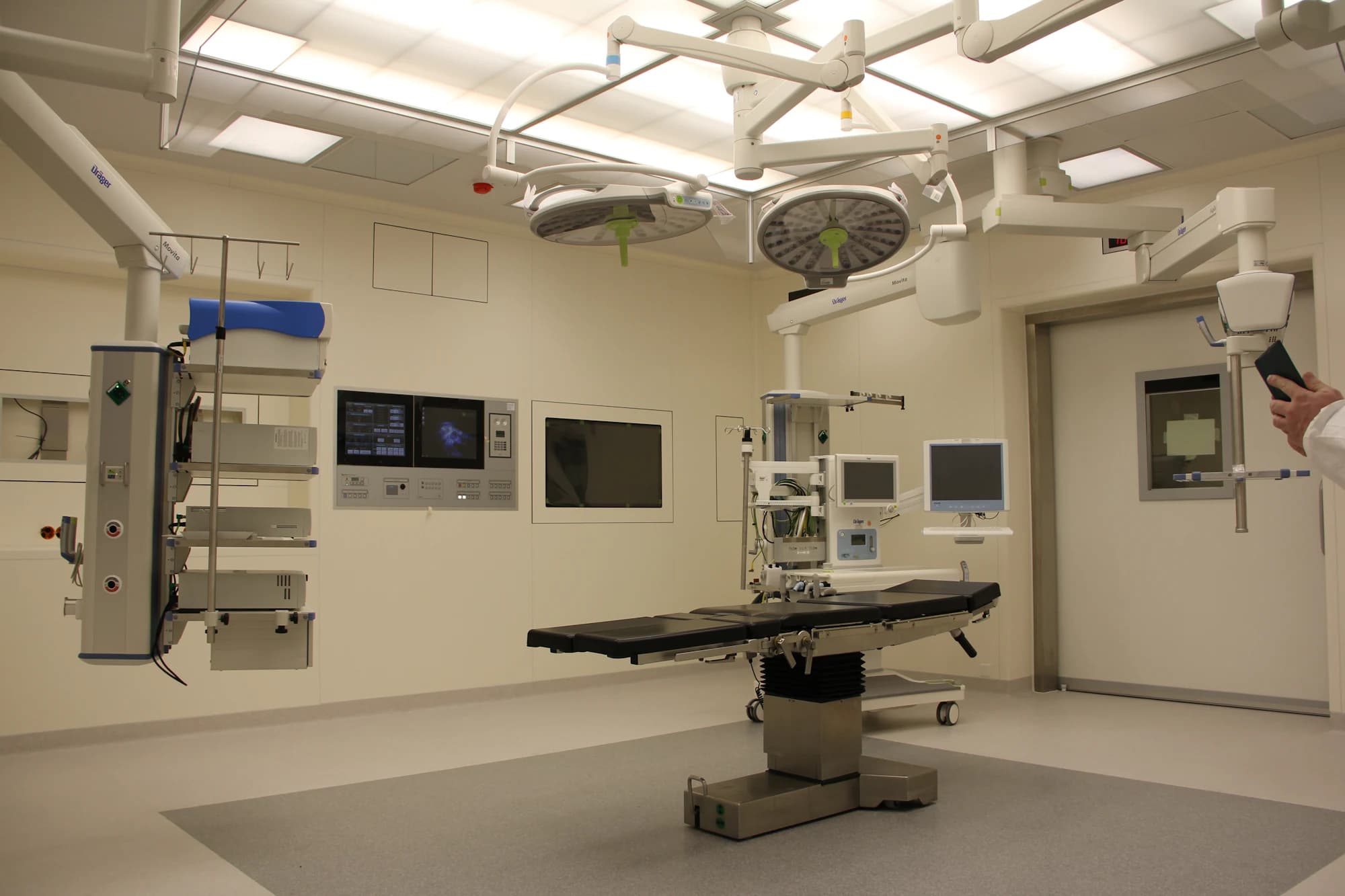
Operating Theatre
A theatre is the most expensive room in the hospital and usually the least instrumented. The list is a board, the safety checklist is a sheet that is filed, and the implant that cost more than the surgery is written on a sticker somebody remembers to peel off.
The room the hospital cannot afford to guess about.
Theatre utilisation, consumable spend and the safety file are three questions with one answer, and the answer is whether the case was recorded as it happened.
A theatre manager is asked three things every month: why the list overran, why the implant spend moved, and where the checklist for a particular case is. All three are answerable from the same set of facts, and in most hospitals all three are answered by a different person reading a different book.
The surgery itself is rarely the problem. The record of the surgery is.
The case
Booking to bill.
Booking
The case is booked against the patient's visit, on a theatre Nexus holds as a real resource with a real schedule. The list is the system rather than a photograph of a whiteboard.
Pre-operative
Consent, the anaesthetic assessment and the pre-operative order set are structured forms and orders, locked when completed, so a case reaches the door with its signatures already in place.
Sign in, time out, sign out
The surgical safety checklist is signed per case on the record at all three points, by the people who were actually in the room.
The case
Implants, consumables and theatre time are captured as they are used. Each one is an order, so each one reaches the bill and the traceability record at the same moment.
Recovery and return
The operation note, the recovery observations and the instrument count close the case. The set goes back to sterile services against the case that used it.
Utilisation falls out of this rather than being surveyed. So does implant spend, and so does the checklist compliance rate.
Impact and action
The list is a whiteboard.
- Cases are added, moved and cancelled by phone. The anaesthetist, the ward, sterile services and the porter each hold a different version of the day.Gate schedules the case against the theatre as a resource, so one list is read by everyone who has to act on it.Gate
- Turnaround time between cases is unmeasured, so an overrun is explained rather than examined.Falcon reports theatre utilisation, turnaround and start-time drift as live measures off the case record itself.Falcon
The implant is billed later, or never.
- Stents, plates, meshes and lenses are recorded on a sticker sheet and typed into the bill by the billing desk a day later, working from handwriting.Forge captures the implant at the point of use as an order, and Vault adds the charge in the same movement, at the price the catalogue held when the case ran.ForgeVault
- A recall notice arrives and the hospital cannot say which patients carry that batch.The implant, its batch and the patient are one record, so the question is a query rather than a search of theatre registers.Atlas
The checklist is a sheet that gets filed.
- The surgical safety checklist is completed on paper and filed. Compliance is estimated, and a specific case takes a day to find.Glyph carries the checklist as a form that is signed per case and locked on completion, with a version history that ties the filled form to the form design in use that day.Glyph
- Accreditation evidence for the theatre is assembled in the weeks before an assessment, from records that were kept for another purpose.Vigil reads the theatre's own activity as it happens and keeps the evidence file live against the standard.Vigil
The tools this department lives in.
Read top to bottom. Each tag is a tool inside Pensieve, and the line beside it is what that tool does in a theatre specifically.
| Tool | What it does in this department |
|---|---|
| Gate | The theatre list itself: booking, sequencing, cancellation and the move from ward to theatre to recovery. |
| Forge | Pre-operative order sets, implants, consumables and theatre time, each captured as an order at the point of use. |
| Glyph | Consent, the anaesthetic assessment, the surgical safety checklist and the operation note, locked and versioned. |
| Vault | The charge for every implant, consumable and minute of theatre time, at the catalogue price that applied on the day. |
| Cadence | The pre-operative pathway and the instrument count protocol as tracked runs with an overdue flag. |
| Atlas | The case record, the imaging the surgeon is operating from, and the implant register tied to the patient. |
| Quest | Post-operative observations, analgesia and antibiotic doses as due tasks in recovery and on the ward. |
| Vigil | Checklist compliance, surgical site infection tracking and the theatre's accreditation evidence, kept live. |
| Falcon | Utilisation, turnaround, start-time drift, case mix and implant spend per surgeon and per list. |
A theatre is coupled to four departments in real time.
Sterile services
A case needs a set, and the set needs a sterilisation cycle that passed. The set is linked to the case that uses it, so a failed cycle is traceable to the patients it touched.
The blood bank
Group and screen, crossmatch and issue for a listed case run against the same visit, so what was reserved and what was returned are the same record.
Materials and stores
Pensieve integrates with the inventory system a hospital already runs. Where there is none, the app is built in Durin, either by hospital staff with no code and no vendor ticket, or by a Pensieve forward-deployed engineer who builds it for the hospital and hands it over. Anything built that way sits on the same permissions and the same audit trail as the rest of the platform.
Critical care
A post-operative transfer into intensive care carries the operation note, the implant record and the running orders, so the handover is structured rather than spoken.
Published research
What the literature already measured.
Findings about surgical work, each with its study and a link. None of it is a Pensieve result.
- At eight hospitals across eight countries, deaths fell from 1.5 percent to 0.8 percent and inpatient complications from 11.0 percent to 7.0 percent after the surgical team began briefing off one checklist.Haynes AB, Weiser TG, Berry WR, et al. New England Journal of Medicine, 2009. One of the eight sites was in New Delhi.
- A systematic review found health care associated infection affecting 15.5 patients per 100 admitted in developing countries, with surgical site infection the most frequent category.Allegranzi B, Bagheri Nejad S, Combescure C, et al. The Lancet, 2011.
- After nine hospitals put the handover between clinical teams into one structured form, medical errors fell 23 percent and preventable adverse events fell 30 percent.Starmer AJ, Spector ND, Srivastava R, et al. New England Journal of Medicine, 2014. Theatre to recovery to ward is three handovers in one afternoon.
Traceability
What a theatre has to be able to prove.
A theatre is asked to prove things years after the case, and the proof has to be the record made at the time.
- The checklist was signed, by whom, and at which of the three points. Glyph locks the form on completion and keeps the version, so the filled form always matches the design that was in force.
- The implant that is inside a particular patient, and every other patient carrying the same batch. That is one query against the case record.
- Who opened the case record, and when. Cirith keeps the access log, and an administrator can ask the question about one patient or about one staff member.
- The consent that was taken, in the form that was used that day, with the signature attached to it.
None of this is a separate compliance exercise. It is the by-product of recording the case once, in the room, at the time. Read the evidence model and the compliance file.