Department
IPD / Inpatient Wards
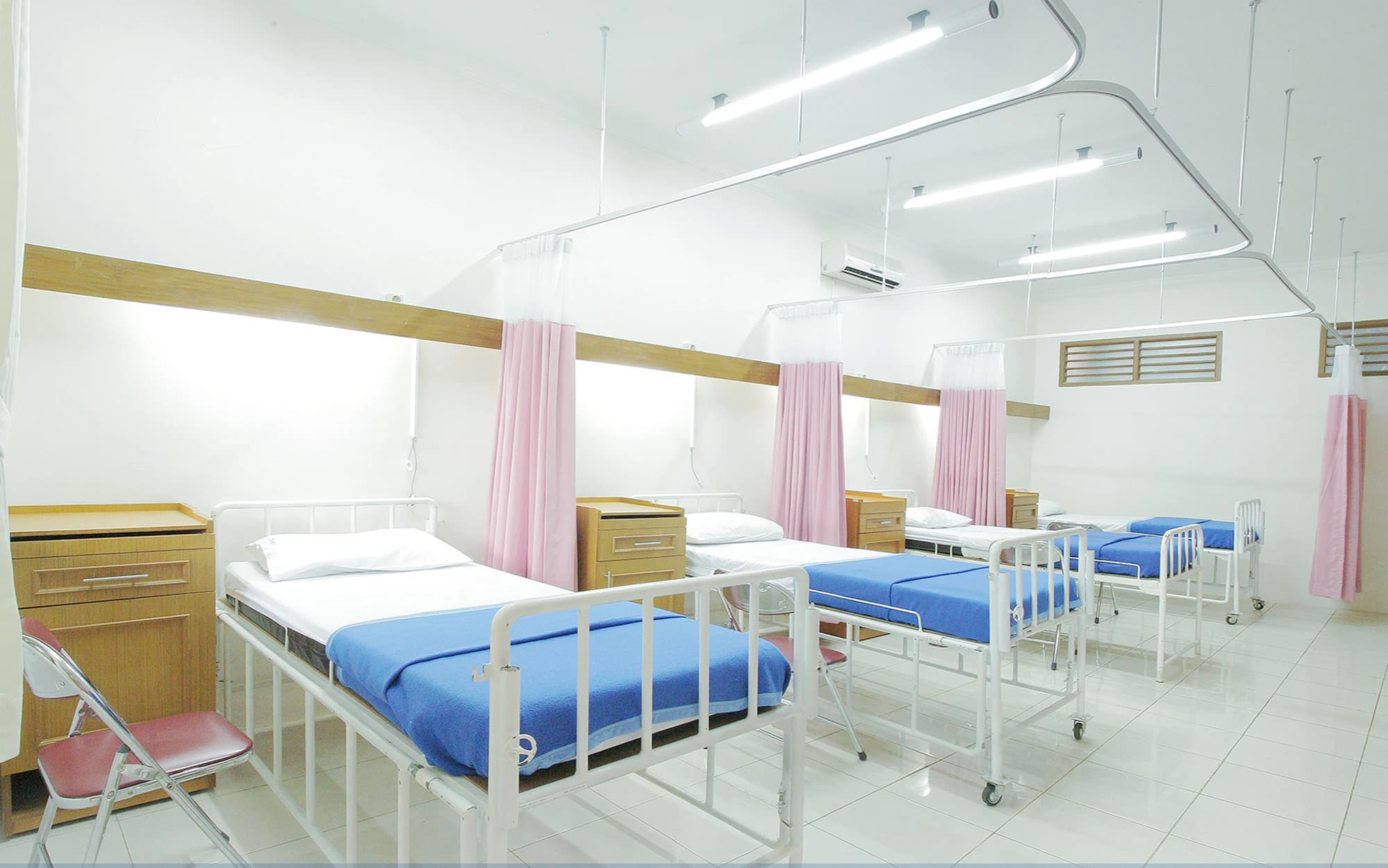
A ward runs on two things nobody has written down: which beds are actually free, and what is due in the next hour. Both live in a nurse's head, a whiteboard and a register, and both are re-established from scratch at every shift change.
A ward is the only department that never closes, and it is the one running on the least written-down information in the building.
Impact and action
Nobody owns the bed.
- Occupancy is a whiteboard at the nursing station. Admissions calls the ward, the ward calls housekeeping, and a bed sits empty for two hours after the patient has gone because nobody told the board.Nexus holds the wards, rooms and beds as a digital twin of the hospital, and Gate moves a patient through admission, transfer and discharge against it, so the board is the system rather than a copy of it.Gate
- A transfer between wards is a phone call, and the receiving nurse rebuilds the picture from the file that arrives with the trolley.The transfer moves the visit, so the orders, the drug schedule and the notes arrive in the new ward already attached to the patient.GateAtlas
The drug round is a memory test.
- Doses are transcribed from the case sheet onto a nursing chart, and a missed dose is discovered at the next round, if at all.Quest turns each ordered dose into a scheduled task with a due time, marks it given, missed or skipped, and keeps that history against the patient.QuestForge
- A deteriorating patient is escalated by whoever happens to notice, and the escalation has no owner and no record.Sentinel raises an owned alert with an escalation chain, tracks whether it was seen, acknowledged and resolved, and hands delivery to Raven.SentinelRaven
Discharge takes a day longer than the medicine does.
- The summary is retyped from scattered notes by whoever is free. The bill waits for the pharmacy returns, and the pharmacy waits for the ward.Atlas tracks the discharge process end to end and assembles the summary from structured entries the ward already made, rather than from a second act of typing.AtlasGlyph
- The patient is medically ready and financially stuck, and the ward finds out at the counter.Vault holds the running bill against the visit and can block or clear the discharge on settlement, so the ward sees the financial state at the same moment as the clinical one.Vault
The ward is downstream of four departments.
Housekeeping decides the bed board
A discharge is only a free bed once the room has been turned around. Cadence runs the turnaround as a checklist and the bed-ready state feeds the board, so admissions is reading a fact rather than a hope.
The pharmacy decides the drug round
A dose that has been scheduled and a dose that has been issued are two different facts. Both hang off the same order, so a ward can see which one it is looking at.
The laboratory decides the ward round
A morning round waits on results that are already validated in the laboratory. The result lands on the record it was ordered from, and a critical value becomes an alert with an owner.
The kitchen decides the diet
A therapeutic diet ordered on the round reaches the kitchen as an order rather than a slip, and a change made at eleven is a change the trolley knows about at noon.
The tools this department lives in.
Read top to bottom. Each tag is a tool inside Pensieve, and the line beside it is what that tool does on a ward specifically.
| Tool | What it does in this department |
|---|---|
| Gate | Admission, bed allocation, transfer and discharge as one lifecycle, against the wards and beds Nexus holds. |
| Quest | Every ordered dose as a due task, plus observations, turns and reviews, landing with whoever is on shift. |
| Atlas | The case record: notes, results, uploaded documents, consent history, and the discharge process itself. |
| Forge | Ward orders for drugs, tests, imaging, procedures and cross-consultations, on one path through fulfilment. |
| Sentinel | Deterioration, critical values and unacknowledged escalations as owned alerts with a chain, grouped and resolved as a set. |
| Glyph | Nursing assessment forms, vitals flowsheets, consent forms and the structured entries the summary is later built from. |
| Vault | The running bill against the stay, deposits, payer rules, and the discharge hold or clearance. |
| Cadence | The admission checklist, the pre-discharge checklist and the transfer protocol as tracked runs with an overdue flag. |
| Falcon | Occupancy, average length of stay, discharge delay by cause, and where the ward is losing hours. |
Published research
What the literature already measured.
Findings about how ward work behaves, each with its study. None of it is a Pensieve result.
- After nine hospitals put the handover between clinical teams into one structured form, medical errors fell 23 percent and preventable adverse events fell 30 percent across 10,740 admissions.Starmer AJ, Spector ND, Srivastava R, et al. New England Journal of Medicine, 2014. The duration of the handover itself was unchanged.
- Across 73 studies, direct communication between hospital and primary care physicians occurred in 3 to 20 percent of cases, and a discharge summary was available at the first follow-up visit 12 to 34 percent of the time.Kripalani S, LeFevre F, Phillips CO, et al. JAMA, 2007. The summary was frequently missing test results pending at discharge.
- A systematic review found health care associated infection affecting 15.5 patients per 100 admitted in developing countries, against 7.6 per 100 in Europe.Allegranzi B, Bagheri Nejad S, Combescure C, et al. The Lancet, 2011. Length of stay is both a cause and a consequence.
Discharge
The day the bed is released.
The decision
The consultant marks the patient for discharge on the record. Cadence starts the pre-discharge run, and every department with a step in it sees that step appear.
The outstanding work
Pending results, pharmacy returns, implant records and unsigned forms are listed as open items with owners, rather than discovered one at a time.
The summary
Atlas assembles the discharge summary from the structured record: diagnoses, procedures, drugs, results and follow-up. The clinician reviews and signs it.
The bill
Vault has been accruing the charges as the orders were placed. Settlement clears the discharge hold, and the scheme or insurance pack is built from the same record.
The bed
Discharge releases the bed to housekeeping. The turnaround checklist runs, and the bed becomes available on the board when the room is genuinely ready.
Every step here already happens. What changes is that each one has an owner, a state and a time, so the delay is visible while it can still be fixed.
Governance
A record several teams write into.
A ward record is written by a resident at midnight, a staff nurse at six, a physiotherapist at ten and a consultant on the round, and it is read by the billing desk, the insurance desk and, eventually, an auditor.
- Every entry carries its author, the time, the department and the signature. Nothing is anonymous and nothing is silently editable.
- Quest lands a task with whoever is actually on duty, because Nexus holds the roster. A due task with no owner is the failure mode this closes.
Governance
The ward holds the record for as long as the stay.
A stay is the longest continuous claim any department makes on a patient record, and it is worked by the most people: two or three shifts a day, a rotating nursing establishment, visiting consultants, and a night registrar who covers wards she does not normally work. Nurse staffing is the strongest published predictor of what happens on that ward. Source 26
Access follows the roster.
Nexus maintains a digital twin of the hospital: the wards and rooms, the teams, the assets, and the duty roster that says who is on shift and where. Access follows that roster, so covering a ward grants what covering it needs and ending the shift ends it.
Every read is attributable.
Atlas keeps the history of consent and of who has read the record. Authorization is checked on every read and on every write, and the audit entry is written in the same transaction as the change rather than by a job that runs later.
One instance, several sites.
A group that runs several units keeps one patient index, one tariff master and one governance model across them. A patient moved between units moves inside one record rather than arriving as a new one.
Compliance and supply
What the ward has to be able to show.
- The discharge summary.It gates the claim and it is the handover to whoever sees the patient next. Assembled from structured data on the record rather than retyped from scattered notes.
- Medication administration.Each ordered dose is a scheduled task with a due time, marked given, missed or skipped, with that history kept against the patient.
- Consumables at the bedside.Pensieve integrates with the inventory system a hospital already runs. Where there is none, the app is built in [Durin](/tools/durin), either by hospital staff with no code and no vendor ticket, or by a Pensieve forward-deployed engineer who builds it for the hospital and hands it over. Anything built that way sits on the same permissions and the same audit trail as the rest of the platform.